Practical info travel guide: your essential companion for smooth trips
A practical travel guide with actionable tips, checklists, and clear guidance for planning, packing, and navigating destinations.
If you’re planning a trip, a practical info travel guide helps you move from “I want to go somewhere” to “I’m on my way.” This guide focuses on actionable steps you can take before you go, while you’re away, and after you return. It emphasizes clear planning, smart packing, and reliable routines that reduce stress. Use the sections below as a checklist you can adapt to any destination.

Before you travel: grounding your plans
Define your priorities
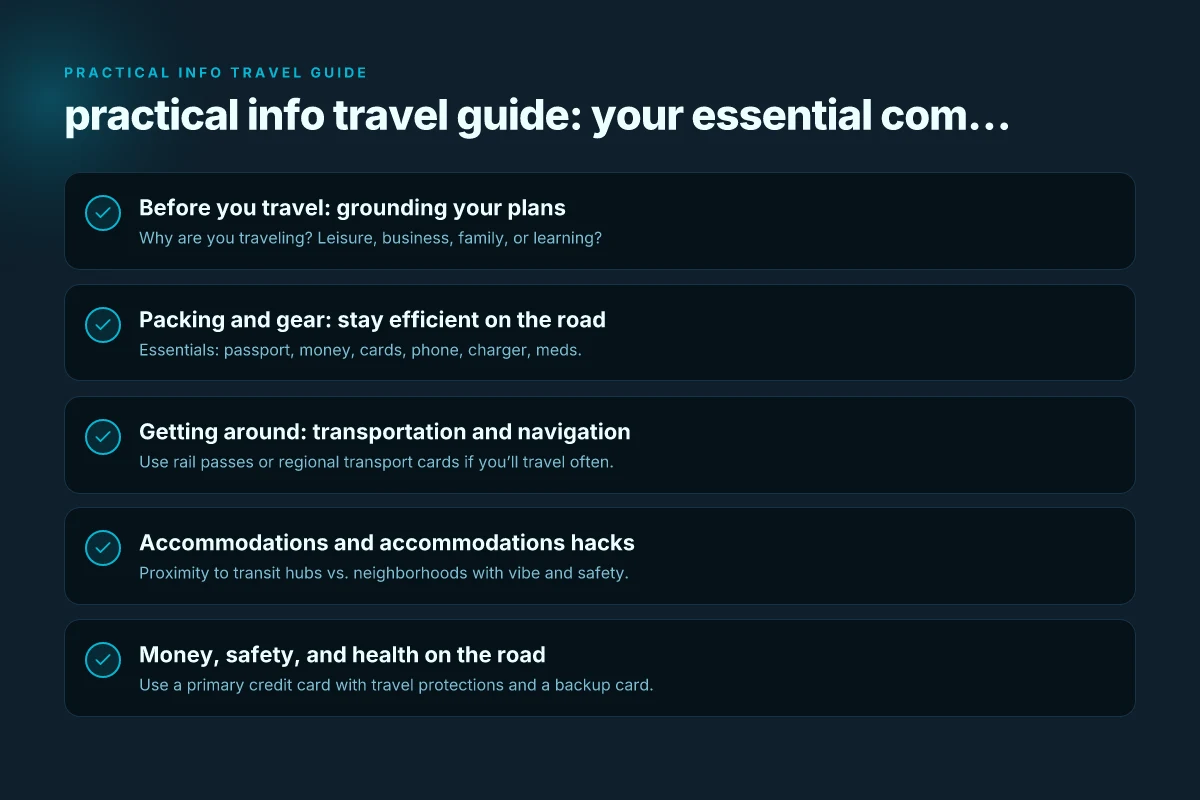
- Why are you traveling? Leisure, business, family, or learning?
- What must you see or do? Create 2–3 non-negotiables.
- What pace suits you? Fast-paced days or slow, spontaneous ones?
Gather essential documents
- Passport, visa (if needed), and copies kept separately (digital and physical).
- Travel insurance details including policy number and emergency contact.
- Driver’s license or international driving permit if you plan to drive.
Set a realistic budget and schedule
- Create a rough day-by-day budget with a 20% contingency.
- Reserve major expenses (hotels, trains, tours) early to lock in prices.
- Build a flexible daily plan with a couple of “free” days.
Research practical details
- Local transport options and their costs. Note peak times.
- Entry requirements, health advisories, and safety tips.
- Local etiquette, tipping norms, and language basics.
Packing and gear: stay efficient on the road
Create a smart packing list
- Essentials: passport, money, cards, phone, charger, meds.
- Layered clothing for changing weather. Consider a compact rain shell.
- Electronics and adapters: country-specific plugs and a small power bank.
Pack like a pro
- Use packing cubes to separate outfits by type.
- Roll clothing to save space and reduce wrinkles.
- Use a dedicated day bag for daily excursions and a secure daypack for valuables.
Tech and safety gear
- Universal adapter and power bank with enough capacity.
- Lightweight first-aid kit. Include blister bandages and pain relievers.
- Small security items: money belt, anti-theft backpack, padlock.
Getting around: transportation and navigation
Booking vs. on-the-ground options
- Use rail passes or regional transport cards if you’ll travel often.
- Compare flights, trains, and buses for the same routes to save time.
- Local ride-hailing apps may be cheaper than taxis but know the pickup points.
Navigating once you’re there
- Download offline maps and a translation app for emergencies.
- Keep a visible physically printed map as a backup.
- Learn 2–3 phrases for directions and help in the local language.
Safety on the move
- Watch your belongings in crowded places. Keep valuables secure.
- Use hotel safes or lockable luggage when possible.
- Share your itinerary with a friend or family member.
Accommodations and accommodations hacks
Choosing where to stay
- Proximity to transit hubs vs. neighborhoods with vibe and safety.
- Read recent reviews focusing on management responsiveness and cleanliness.
- Consider refund policies that provide flexibility if plans change.
In-room tips and routines
- Confirm check-in times and have your contact details handy.
- Use hotel/hostel amenities to save money (kettles, laundry, breakfast options).
- Schedule wake-up calls or set multiple alarms if needed.
Dealing with changes
- If a reservation falls through, have a backup option in mind.
- Use price-tracking alerts for last-minute deals on accommodations.
- Keep a spreadsheet or note of booking references and cancellation policies.
Money, safety, and health on the road
Budget control and payments
- Use a primary credit card with travel protections and a backup card.
- Carry a small amount of local currency for places that don’t take cards.
- Use digital wallets where accepted and secure your devices.
Health and travel safety basics
- Check required vaccines and bring any necessary medications with prescriptions.
- Stay hydrated and pace yourself to avoid jet lag, especially on first days.
- Be mindful of food safety and tap water guidelines for the destination.
Tech-savvy and privacy tips
- Use two-factor authentication and strong passwords on devices.
- Turn on “Find My” features for devices in case of loss.
- Be cautious with public wifi. Use a VPN for sensitive activity.
Practical day-by-day guide and checklists
A handy starter checklist
- Passport, tickets, hotel confirmations, and local contact numbers.
- A daily itinerary with times and backup options.
- A small, adaptable wardrobe and essential toiletries.
A simple “what to do today” plan
- Morning: minimum 1 must-see activity.
- Afternoon: one local experience like a market or park.
- Evening: try a local dish or a casual stroll in a safe area.
A one-page quick reference table
| Category | What to check/do | Why it helps |
|---|---|---|
| Documents | Copies, scan, emergency numbers | Replaces lost items and speeds help |
| Money & cards | Local currency, travel card limits | Keeps you prepared for expenses |
| Transport | Timings, tickets, app maps | Reduces delays and confusion |
| Health & safety | Meds, insurance, emergency contacts | Prepared for mishaps |
| Tech & connectivity | Chargers, adapters, offline maps | Keeps you connected and informed |
Local tips that save time and stress
- Arrive early to popular attractions to beat lines.
- Use local markets for affordable meals and authentic snacks.
- Pick a few “anchor” activities and leave flexible time around them.
Final section: the recommended practical approach
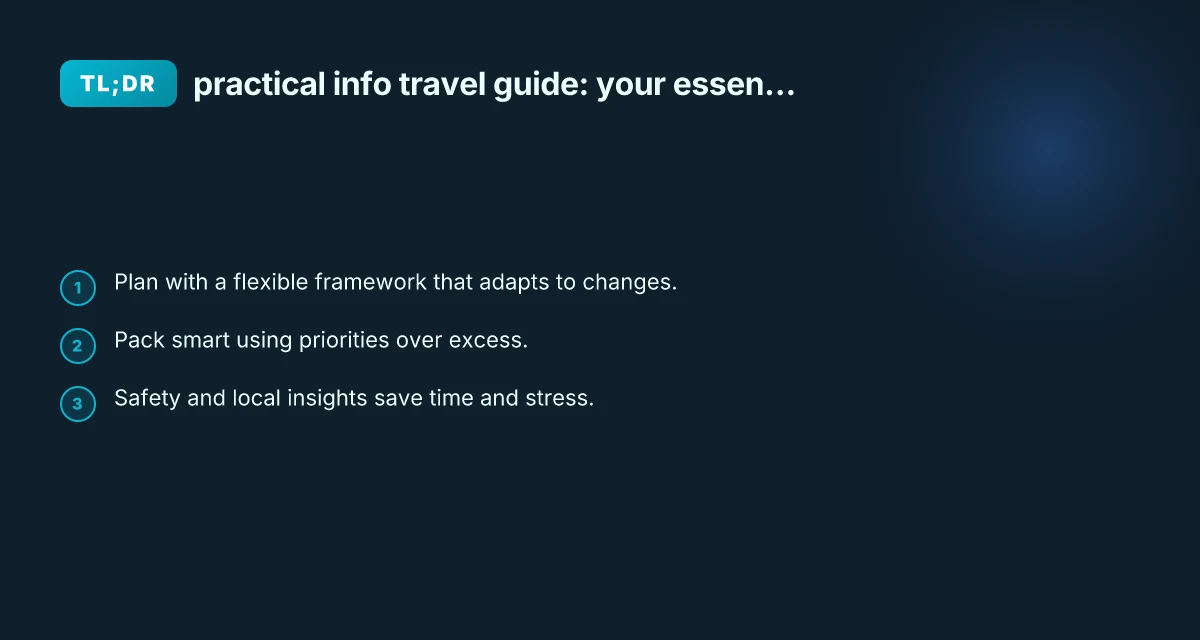
If you want a reliable travel flow, follow a light but robust framework: Plan with clear priorities and flexible buffers, pack efficiently with essentials, move using a mix of pre-booked and on-the-ground options, and keep a consistent safety and health routine. The key is to avoid over-planning while keeping a dependable backbone: your documents, funds, and a basic daily plan.
Recommendation: Create a one-page travel brief a week before departure. Include: your must-dos, transport plan, accommodation details, emergency contacts, and a weather-ready packing list. Carry a digital copy on your phone and a printed copy in your bag. This simple document acts as your north star when plans shift, helping you stay calm and adaptable on any trip.