Things to do in chengdu
Discover the best things to do in Chengdu, from panda experiences to ancient sites, food, and modern culture.
Chengdu is a city that invites slow, delicious days and vivid encounters with nature and history. From iconic panda sanctuaries to ancient temples, vibrant markets, and a food scene that defines the Sichuan flavor, Chengdu rewards travelers who mix iconic sights with relaxed urban exploration. Whether you’re here for a weekend or a longer stay, the city’s easy pace and friendly locals make it simple to craft a memorable itinerary.

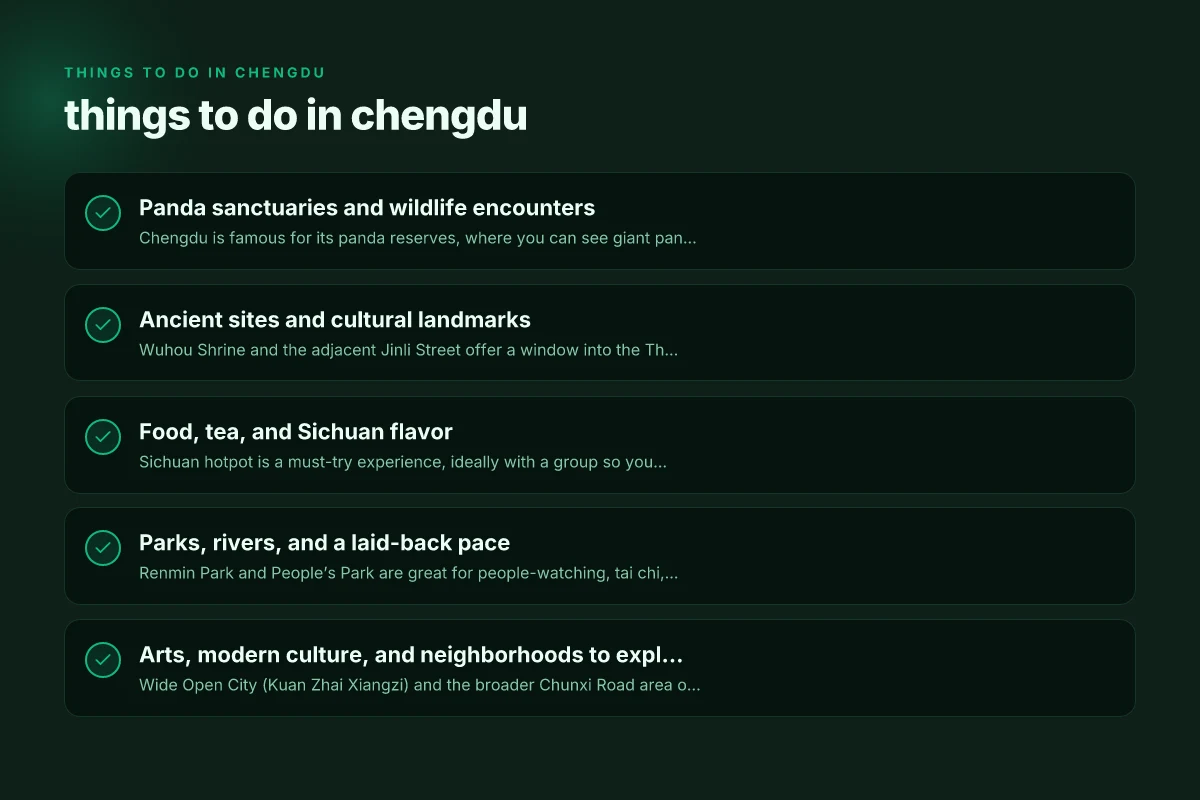
Panda sanctuaries and wildlife encounters
What to expect
- Chengdu is famous for its panda reserves, where you can see giant pandas and red pandas up close.
- The best-known site is the Chengdu Research Base of Giant Panda Breeding, which focuses on conservation and often has lively panda activity in the morning.
- Nearby, you can visit the Dujiangyan Panda Base or add a broader Sichuan wildlife experience.
Tips for visiting
- Arrive early to catch pandas when they’re most active.
- Dress in layers. Indoor habitats can be cool, and the outdoor enclosures may be breezy.
- Respect the animals: no flash photography and follow the guide’s instructions.
Ancient sites and cultural landmarks
Core sights to include
- Wuhou Shrine and the adjacent Jinli Street offer a window into the Three Kingdoms era and Qing dynasty aesthetics.
- The Temple of Marquis Wu (Wuhou) pairs history with a peaceful garden setting.
- People’s Park is a livelier alternative for a quick cultural snapshot and tea houses nearby.
Optional day-trip options
- Leshan Giant Buddha is a longer excursion but feasible with a day trip if you love monumental sculpture and river views.
- Mount Qingcheng and Dujiangyan irrigation system blend Taoist temples with engineering marvels.
Food, tea, and Sichuan flavor
What to eat and drink
- Sichuan hotpot is a must-try experience, ideally with a group so you can sample a broad array of dipping sauces.
- Mapo tofu, kung pao chicken, and dan dan noodles are classic dishes you’ll encounter in market stalls and restaurants.
- Tea houses in the old neighborhoods provide a slower pace and a peek into local social life.
Local markets and dining districts
- Jinli Ancient Street offers traditional snacks, local crafts, and a picturesque stroll with lanterns and storefronts.
- Shuangliu and local night markets let you taste everything from street skewers to simmered delicacies.
- Modern eateries, fusion cafes, and craft beer bars populate the city’s newer neighborhoods, balancing tradition with contemporary tastes.
Parks, rivers, and a laid-back pace
Green spaces to linger
- Renmin Park and People’s Park are great for people-watching, tai chi, and tea-sipping in the afternoon.
- Jinsha site park provides a blend of ancient relics and modern landscaping along a pleasant riverfront.
Tips for enjoying Chengdu’s outdoors
- Take time to sip tea in a shaded pavilion, watching locals go about their day.
- Riverside paths are ideal for a relaxed stroll or a casual bike ride.
- Some parks host live performances or art stalls on weekends, so check schedules.
Arts, modern culture, and neighborhoods to explore
Creative hubs and districts
- Wide Open City (Kuan Zhai Xiangzi) and the broader Chunxi Road area offer shopping, cafes, and contemporary art galleries.
- Anren Old Town and the nearby industrial heritage areas showcase modern sculpture, art studios, and boutique galleries.
A balanced itinerary
- Combine a morning temple visit with an afternoon gallery stroll, then finish with a dinner at a trendy Sichuan restaurant.
- If you’re staying in a guesthouse or a boutique hotel, ask for a local guide to tailor an art- and food-forward route.
Practical planning and travel tips
Getting around and best times to visit
- Chengdu’s subway and modern bus network are efficient for city sightseeing. Taxis and ride-hailing apps are widely available.
- Spring (March–May) and autumn (September–November) offer comfortable temperatures for outdoor activities.
- Weekdays tend to be quieter at major attractions. Mornings are best for panda bases and temples.
Getting to and from nearby sights
- Panda bases are typically outside the city center. Plan a half-day or full-day trip with a driver or organized tour.
- For temples and ancient sites, combine with a market visit to maximize your day.
Practicalities
- Currency, tipping norms, and language: cash is still widely accepted, but cards and mobile payments are common; English signage is improving, so having a translation app helps.
- Etiquette: when visiting temples and sacred spaces, dress modestly and speak softly.
Comparison of top Chengdu experiences
| Experience | Typical duration | Key highlight | Best time to visit | Approx. cost (per person) | | Panda bases | Half to full day | Panda encounters, conservation work | Morning hours | Moderate to high (depending on base) | | Ancient sights | 2–4 hours per site | Temples, gardens, historic streets | Any day, mornings for crowds | Low to moderate | | Food explorations | Flexible | Street food, hotpot, markets | Evening for markets, lunch for casual bites | Moderate to high (depends on dining style) | | Parks and tea houses | 1–2 hours | Local life, tai chi, tea ceremonies | Afternoon, weekends for events | Low to moderate | | Modern neighborhoods | 2–4 hours | Shops, galleries, cafés | Daytime into evening | Moderate |
In Chengdu, you’ll notice a rhythm that invites slower, more deliberate days. The city’s blend of wildlife encounters, ancient heritage, and a vibrant food and arts scene creates a experience that feels uniquely Sichuan. Whether you’re savoring a hotpot with friends, strolling along a shaded riverbank, or listening to a street musician in a renovated alley, Chengdu rewards curiosity and a relaxed pace.
Recommendation
- If you only have limited time: prioritize the Panda Base in the morning, an afternoon walk through Jinli Street, and a sunset tea at a traditional teahouse in People’s Park. This mini-route gives you wildlife, culture, and a taste of everyday Chengdu life in one compact day.
- For a longer stay: plan two days for panda experiences (one day at the Chengdu Base, another at a second reserve such as Dujiangyan or a nearby facility), plus a full day for ancient sites (Wuhou Shrine, Jinli Street, and a temple complex like Qingcheng Mountain) and a final day for food markets, a modern neighborhood tour, and a relaxed riverfront stroll. This balance captures wildlife, history, and modern urban culture.
If you’d like, I can tailor a 3- or 5-day Chengdu itinerary based on your interests (pandas, food, art, or hiking) and your travel dates. Things to do in beijing