VPN Extension for Microsoft Edge: How to Choose and Use One
Learn what a VPN extension for Microsoft Edge does, how to choose a trustworthy provider, and how to install and test it.
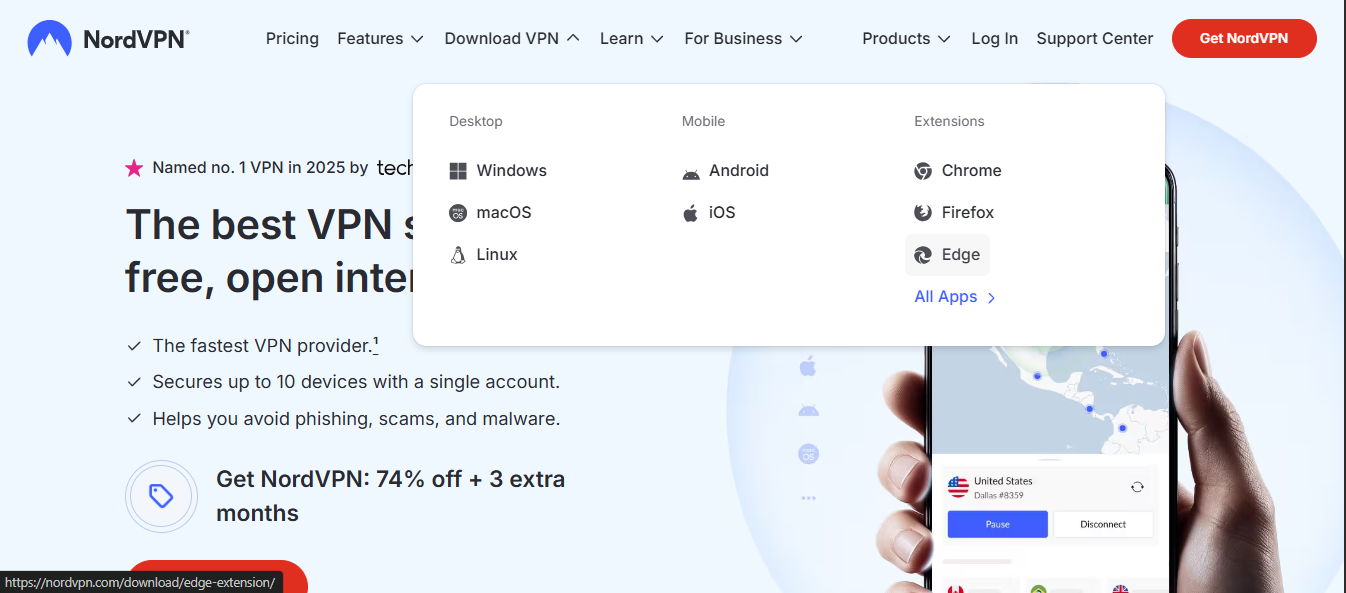
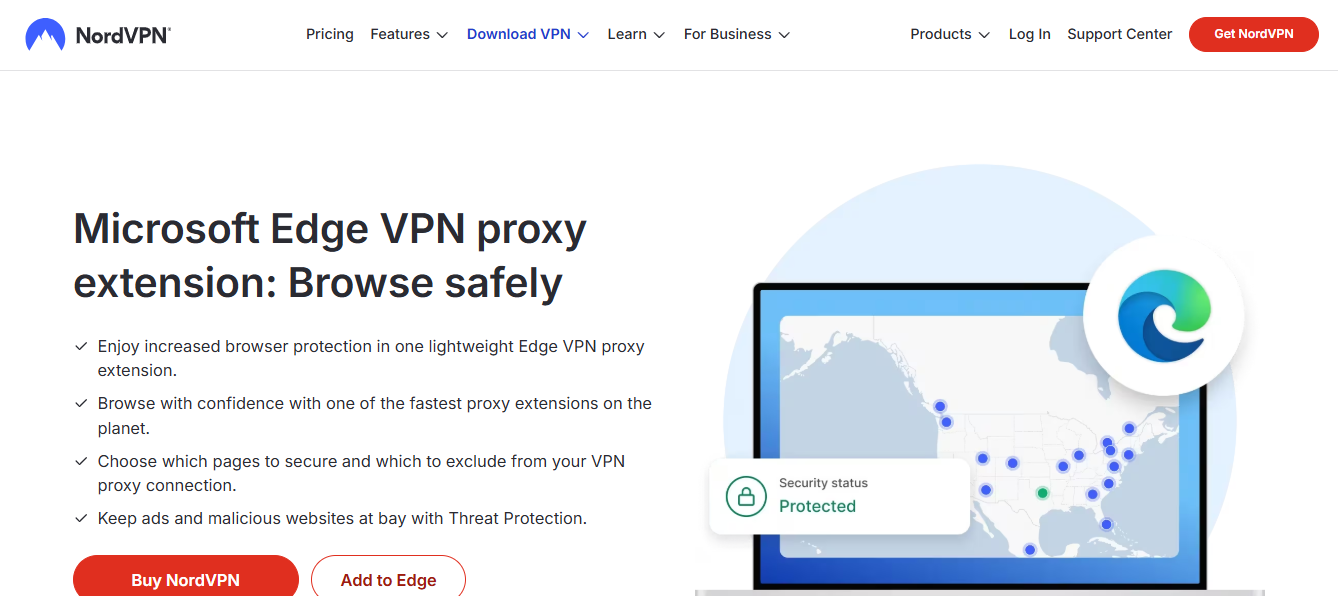
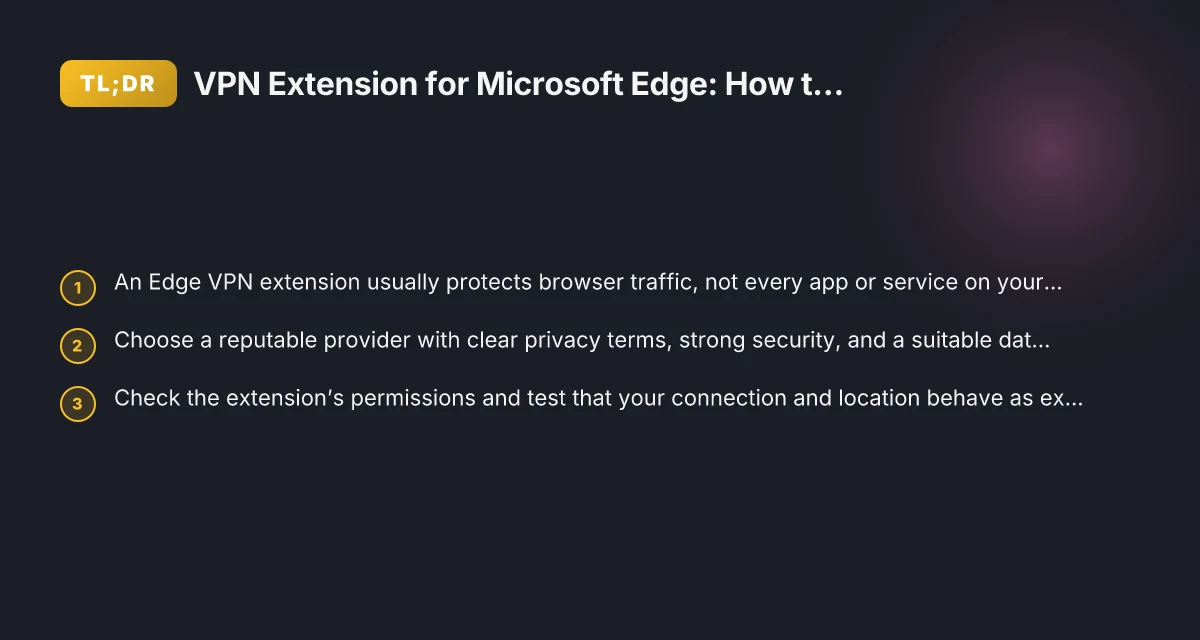
A VPN extension for Microsoft Edge can help protect web browsing on public Wi-Fi, reduce exposure of your browser traffic to network operators, and let you connect through servers in other locations. To get started, choose a reputable VPN provider, install its extension from the Microsoft Edge Add-ons store or the provider’s official website, sign in, and connect to a server. Before relying on it, check what traffic the extension covers and review its privacy and security features.

Editor's pick: NordVPN — fast, secure VPN — Strong encryption, a no-logs policy and apps for every device. 30-day money-back guarantee. Get NordVPN →
Trustworthiness checklist for an Edge VPN extension
| Check | What to look for | Why it matters | Warning sign |
|---|---|---|---|
| Publisher | Recognized VPN provider | Helps verify who operates it | Unknown or misleading publisher |
| Privacy policy | Clear data collection and retention terms | Shows how browsing data is handled | Vague or missing policy |
| Permissions | Only permissions needed for stated features | Limits browser access | Broad, unexplained access |
| Security | Clear explanation of encryption and protection | Helps assess connection safeguards | Unsupported security claims |
| Logging | Specific statement about activity records | Clarifies what may be retained | No meaningful logging details |
| Updates | Recent maintenance and support information | Indicates ongoing care | Appears abandoned |
| Reviews | Consistent, credible user feedback | Can reveal recurring issues | Repeated reports of problems |
Compiled November 2026; check the provider's site for current details.
| VPN | Obfuscation | From / month | Plan | Free plan | Refund | Alipay | UnionPay | Crypto | Website opens in China | Trustpilot | |
|---|---|---|---|---|---|---|---|---|---|---|---|
 ZoogVPN | Turn on manually Shadow | $2.49/mo | 27 months: $59.99 | Yes | 7 days | ✓ | ✓ | ✓ | ✓ | Official site blocked; our special link opens (4.4 s) | 4.2/5 (195 reviews) |
 NordVPN | Turn on manually Obfuscated Servers / NordWhisper | $3.49/mo | 27 months: $94.23 | No | 30 days | ? | ✗ | ✓ | ✓ | ✗ Blocked | 4.2/5 (51,628 reviews) |
 ExpressVPN | ✓ On by default all servers | $3.00/mo | 28 months: $84 | No | 30 days | ✗ | ✗ | ✓ | ✗ | ✗ Blocked | 4.4/5 (29,706 reviews) |
 Surfshark | ✓ On by default Camouflage, with OpenVPN | See site | See site | No | 30 days | ✗ | ✗ | ✗ | ✓ | ✗ Blocked | 4.3/5 (31,823 reviews) |
 Proton VPN | Turn on manually Stealth, free plan too | $2.99/mo | 12 months: $35.88 | Yes | 30 days | ✗ | ✗ | ✗ | ✓ | ✗ Blocked | 2.1/5 (1,040 reviews) |
 Astrill VPN | Turn on manually StealthVPN / OpenWeb | $12.50/mo | 24 months: $300 | No | See site | ✗ | ✗ | ✗ | ✓ | ✗ Blocked | 1.3/5 (110 reviews) |
 Private Internet Access | Turn on manually Shadowsocks, OpenVPN only | $2.03/mo | 40 months: $81.2 | No | 30 days | ✗ | ✗ | ✗ | ✗ | ✗ Blocked | 4.2/5 (11,033 reviews) |
 CyberGhost | Turn on manually selected servers | $2.19/mo | 28 months: $61.32 | No | 45 days | ✗ | ✗ | ✗ | ✓ | ✗ Blocked | 4.0/5 (24,178 reviews) |
 PureVPN | Turn on manually switch to OpenVPN | $1.69/mo | 60 months: $101.55 | No | 31 days | ? | ? | ✗ | ✓ | ✗ Blocked | 4.4/5 (17,994 reviews) |
 AdGuard VPN | ✓ On by default TrustTunnel | $2.99/mo | 24 months: $71.76 | Yes | 30 days | ✓ | ✗ | ✓ | ✓ | Official site blocked; our special link opens (3.7 s) | 4.3/5 (290 reviews) |
 Mullvad | Turn on manually QUIC / Shadowsocks / LWO | $5.61/mo | €5/mo | No | 14 days | ✗ | ✗ | ✗ | ✓ | ✗ Blocked | 3.2/5 (192 reviews) |
 Windscribe | Turn on manually Stealth / WStunnel | $5.75/mo | 12 months: $69 | Yes | See site | ✗ | ✗ | ✗ | ✓ | ✗ Blocked | 4.7/5 (13,355 reviews) |
 StrongVPN | Turn on manually Scramble, OpenVPN TCP | See site | See site | No | 30 days | ✓ | ✗ | ✗ | ✗ | ✗ Blocked | 4.4/5 (2,695 reviews) |
 LightXtreme 闪连 | Not listed | $7.08/mo | 12 months: $84.99 | Yes | 30 days | ✓ | ✓ | ✓ | ✓ | ✓ Yes (3.5 s) | No page |
Prices checked 2026-11-10 on each vendor's pricing page (cheapest long plan, USD). Check the vendor's checkout for the final price.
Obfuscation checked 2026-11-14 on each vendor's site and help center: "on by default" = nothing to set; "turn on manually" = switch protocol or mode in settings; "not listed" = the vendor describes no obfuscation.
Payment methods checked 2026-11-10 on each vendor's payment pages: all 14 take cards and PayPal; ✗ = not listed, ? = the vendor's own pages disagree.
China access: whether the official website opens from mainland China networks (tests the website only, not the VPN connection). Last checked 2026-11-18 01:02 Beijing time.
Trustpilot score and review count checked 2026-11-10.
What a VPN extension for Microsoft Edge does
A browser VPN extension is an add-on that routes some or all of your Edge traffic through a VPN provider’s servers. Websites generally see the server’s IP address rather than your usual public IP address. The connection between the browser and VPN server is typically encrypted, which can help protect browsing data on an untrusted network.
However, an extension is not always the same as a full VPN application. Depending on how it is built, it may act as a proxy for browser traffic rather than creating an encrypted tunnel for the entire device.
That distinction matters:
- Browser extension: Usually covers traffic from Edge, subject to the provider’s design and settings.
- VPN app: Typically routes traffic from multiple apps and services on your device.
- Account or sign-in protection: A VPN does not replace strong passwords, multifactor authentication, or safe browsing habits.
A VPN also does not make you completely anonymous. Websites may still identify you through sign-ins, cookies, browser fingerprinting, or other data. It cannot protect you from every scam, malware infection, or privacy risk. Free VPN Extension Edge: How to Choose One for Microsoft Edge
How to choose a trustworthy extension
Look beyond the number of downloads or a promise of “free unlimited VPN.” A VPN provider may be able to see information about traffic routed through its service, so its reputation and privacy practices are important.
Check for:
- A clear privacy policy: It should explain what data the provider collects, why it collects it, and how long it keeps it.
- Transparent ownership: Look for identifiable company information and a way to contact support.
- Useful security controls: Depending on the service, these may include modern encryption, DNS leak protection, and an automatic connection or kill switch.
- A suitable server network: Check whether the available locations meet your needs. More locations do not automatically mean better privacy or performance.
- Honest plan details: Confirm data limits, speeds, subscription terms, and whether the extension requires a paid account.
- Independent scrutiny: Audits or other credible assessments can provide useful evidence, though they do not guarantee that a service is risk-free.
Be cautious if an extension asks for broad permissions without explaining why, makes unrealistic anonymity claims, or has little information about its operator. Read the listing and the provider’s policy before installing.
How to install and set up a VPN in Edge
The exact labels may differ by provider, but the general process is straightforward: Microsoft Edge Secure Network VPN: How It Works and How to Use It
- Open the Microsoft Edge Add-ons store and search for the provider’s official extension.
- Confirm the developer name and review the permissions, description, and recent user feedback.
- Select Get or the equivalent installation option and approve the requested permissions.
- Open the extension from Edge’s toolbar. If it is not visible, use the Extensions menu to pin it.
- Sign in or create an account if required, then choose a server and connect.
- Check the extension’s settings for options such as auto-connect, preferred locations, or leak protection.
You can also follow the installation link on a provider’s official website, but verify that it leads to the genuine Edge Add-ons listing. Avoid downloading browser extensions from unfamiliar sites.
Edge extension or full VPN app?
| Need | Edge extension | Full VPN app |
|---|---|---|
| Protect browser traffic | Can cover Edge traffic, depending on the product | Can cover traffic across supported apps |
| Protect other browsers | Usually no | Often supported |
| Protect all device traffic | Usually no | Often supported |
| Setup location | Installed through Edge | Installed on the device |
| Browser-specific controls | Often available | May offer fewer browser-only controls |
| Device-wide settings | Limited to the extension’s scope | Typically managed in the app |
| Best fit | VPN use mainly in Edge | Protection beyond Edge |
Compiled November 2026; check the provider's site for current details.
Extension or full VPN app?
The right option depends on whether you want to protect only browser activity or traffic from your whole device. Clash for iOS: What It Is and How to Choose a Client
| Feature | Edge VPN extension | Full VPN app |
|---|---|---|
| Coverage | Usually browser traffic; confirm with the provider | Usually traffic from multiple device apps |
| Setup | Installed in Edge | Installed on the computer or device |
| Best suited to | Browser-focused use and quick server changes | Broader device-level protection |
| Potential limitation | Other apps may use your regular connection | May use more system resources or require extra setup |
If you use email, messaging, streaming, or other apps outside Edge and want their traffic routed through a VPN too, a full VPN app is generally the more appropriate choice. Some providers offer both an app and an extension, which can be used according to your needs.
Test the connection and troubleshoot problems
After connecting, check that the extension shows an active VPN connection. You can use a reputable IP-checking service to see whether your public IP address appears to have changed. If your provider offers a DNS leak test, run it as well. These checks can help identify configuration issues, but no single test proves complete privacy.
If the extension does not connect or browsing slows down, try these steps:
- Choose a different server or location.
- Disconnect and reconnect, then restart Edge.
- Update the extension and browser.
- Temporarily disable conflicting privacy or proxy extensions.
- Check the provider’s service status and support guidance.
- Review whether a firewall, workplace network, or school network is blocking VPN connections.
A VPN may also affect sign-in checks, search results, streaming availability, or websites that restrict access by location. Follow the site’s terms and local laws, and do not assume that a VPN makes restricted content or activity permissible. VPN Free: How to Choose a Free VPN Safely
Setup and connection troubleshooting guide
| Stage or symptom | What to check | Practical next step | If it persists |
|---|---|---|---|
| Installation | Extension publisher and permissions | Install the intended extension from Edge Add-ons | Check the provider’s official instructions |
| Sign-in | Account details and subscription status | Sign in again | Contact provider support |
| Connection setup | Extension status and server selection | Connect to a server | Try another available server |
| No connection | Network access and extension state | Reconnect and reload the page | Restart Edge |
| Slow browsing | Server choice and other network activity | Try a different server | Compare with the VPN disconnected |
| Site still detects location | Whether the extension protects only Edge traffic | Check the extension’s coverage and settings | Use the provider’s full VPN app if needed |
| Ongoing errors | Extension and Edge updates | Update both, then retry | Consult provider support |
Compiled November 2026; check the provider's site for current details.
Recommendation
For browser-only protection, a reputable VPN extension for Microsoft Edge can be a convenient option. Choose one with transparent privacy practices, sensible permissions, and features that match your needs, then test the connection after setup. If you want protection for traffic beyond Edge, install and use the provider’s full VPN app instead.