
West Lake Hangzhou: A Timeless Jewel in Zhejiang’s Pearl
Discover West Lake Hangzhou, the iconic lake, its legends, best times to visit, and how to plan a memorable experience.
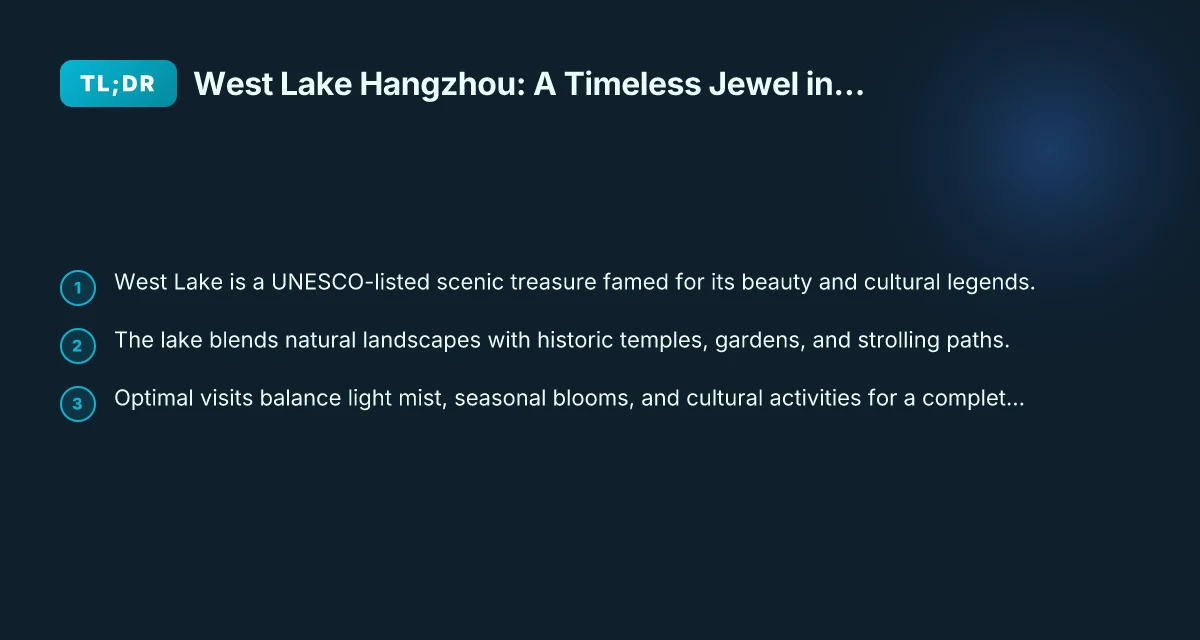
West Lake Hangzhou is more than a lake. It’s a living canvas of Chinese poetry, painting, and garden design. Framed by weeping willows, pagodas, and mountain silhouettes, it has inspired dynasties, poets, and modern travelers alike. In Hangzhou, the lake isn’t just a destination, it’s an invitation to slow down, observe, and savor the contrasts between water, stone, and sky. Whether you’re here for a day trip or a longer foothold in Zhejiang, West Lake rewards patience, gentle walking, and a willingness to listen to legends whispered by the wind.

The essence of West Lake: what makes it special
- A UNESCO World Heritage Site that embodies the classical Chinese landscape ideal.
- Five classic components are traditionally highlighted: the lake proper, islands, causeways, hills, and a ring of historic sites.
- The area around the lake is a tapestry of gardens, temples, bridges, and tea houses.
Core elements you’ll encounter
- The Su Causeway and the Bai Causeway, which cut across the lake and offer scenic viewpoints.
- The Three Pools Mirroring the Moon on the northwest corner, a cluster of pagodas rising from the water.
- Leifeng Pagoda and Yuefei Temple, which anchor the western and southern edges with legends of romance and heroism.
- Longjing tea plantations a short ride away, offering a taste of Hangzhou’s famous tea culture.
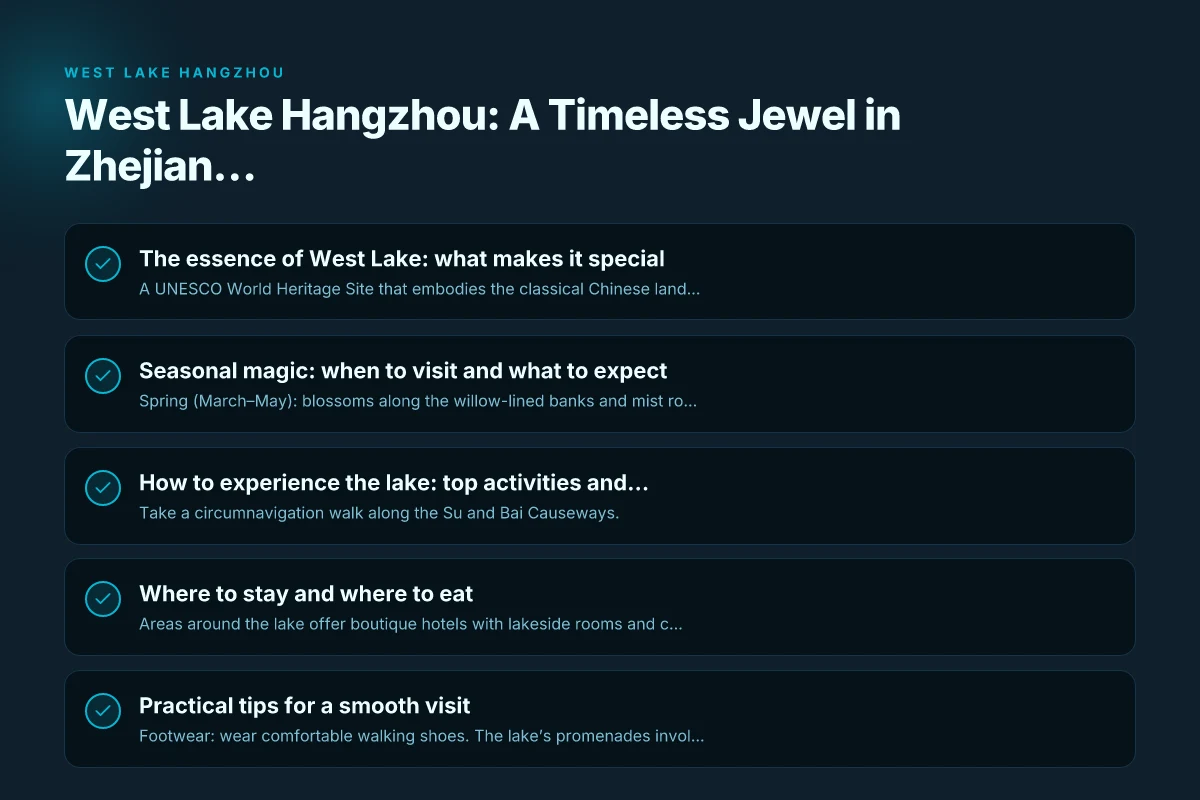
Seasonal magic: when to visit and what to expect
- Spring (March–May): blossoms along the willow-lined banks and mist rolling off the water.
- Summer (June–August): vibrant boat activity and lush greenery, but expect crowds near weekends.
- Autumn (September–November): crisper air, clearer reflections on the lake, peak photography season.
- Winter (December–February): quiet corridors of the lake with moody light and fewer crowds.
What to plan by season
- Spring: timed boat rides at dawn for calm waters and pink blossoms.
- Summer: shaded pavilions, cool tea houses, and a preference for morning or late evening visits to beat heat.
- Autumn: the best light for photography, with a spectrum of golds and ambers on the water.
- Winter: layered clothing, misty horizons, and serene contemplation.
How to experience the lake: top activities and routes
- Take a circumnavigation walk along the Su and Bai Causeways.
- Ride a small boat to approach island temples and get close to the Three Pools.
- Visit the Lingyin Temple area nearby and pair it with a stroll through the nearby tea fields.
- Enjoy a traditional tea ceremony or a sunset drink at a lakeside tea house.
Suggested itineraries
- Classic day: start at the north shore, walk the Su Causeway, circle around to the Three Pools, and finish with a boat ride near the Broken Bridge for iconic views.
- Cultural immersion: Lingyin Temple in the morning, lunch near West Lake, a boat ride in the afternoon, and a tea ceremony at a lakeside venue at sunset.
- Photo-focused: begin at dawn along the Xihu (West Lake) shoreline, capture the mist over the Longjing fields afterward, and end with golden hour reflections on the water.
Where to stay and where to eat
- Areas around the lake offer boutique hotels with lakeside rooms and classic gardens.
- Local eats range from simple street snacks to refined Zhejiang cuisine in canal-side restaurants.
- Tea culture: visit a Longjing tea house to learn about the tea-making process and sample a fresh cup straight from the leaf.
Quick hotel guidance
- Choose a property with water-facing views to maximize the lake experience.
- Look for rooms with balconies or large windows so you can enjoy the scenery from indoors.
- Consider a centrally located stay for easy walking access to key sights and boat landings.
Practical tips for a smooth visit
- Footwear: wear comfortable walking shoes. The lake’s promenades involve long strolls.
- Timing: aim for early mornings or late afternoons to avoid peak crowds and enjoy better light for photography.
- Navigation: use a map or a local guide for precise boat routes and temple timings.
- Etiquette: respect quiet zones around temples and tea houses. Keep noise to a gentle level.
Accessibility and planning
- Public transport to West Lake is well-connected from Hangzhou city center. Taxis and rideshares are common.
- For those sensitive to crowds, weekdays are quieter, and early mornings are the best bet for serene experience.
- If you want a deeper dive, hire a guide who can tailor a custom loop around your interests, gardens, temples, or tea culture.
A quick comparison: West Lake and nearby attractions
| Feature | West Lake Hangzhou | Other Zhejiang Lake Destinations |
|---|---|---|
| UNESCO status | Yes (cultural heritage) | Some sites have national recognition; fewer UNESCO listings |
| Landscape focus | Water, islands, bridges, gardens | Often more natural or rural settings, less urban integration |
| Cultural depth | Strong, with long-standing legends and poetry | Varies, often with fewer guiding narratives |
| Accessibility | Highly accessible from Hangzhou city center | May require longer drives or special routes |
| Seasonal appeal | All year; each season offers a different mood | Seasonal variations exist, but not as pronounced as West Lake |
The legends that color West Lake
- The Legend of the White Lady, a love story associated with the Broken Bridge.
- The legend of Yue Fei, a revered general, whose stories link to the Yueyang and nearby temples.
- The tale of the Ten Thousand Buddhas and other waterfall and pagoda legends that echo through the temples.
Why stories matter here
Legends add a living layer to the scenery. Reading about them before visiting can heighten your appreciation as you walk along the banks or gaze from a pavilion.
Practical planning checklist
- Time your visit: plan for 4–6 hours for a relaxed loop with time for tea or a temple stop.
- Dress code: modest attire for temple visits. Comfortable, weather-appropriate clothing.
- Budget: include boat rides and tea experiences. Many attractions offer bundled passes.
- Transport: consider renting a bike for faster exploration along certain sections.
Pack-list tailored for West Lake
- Light rain jacket or sun protection depending on season
- Water bottle and light snacks for longer walks
- A notebook or sketchbook if you enjoy capturing scenery
- A camera or smartphone with a protective case for outdoor photography
The final recommendation
West Lake Hangzhou remains a timeless pilgrimage for those drawn to landscapes that feel sculpted by poetry and history. Its circular shoreline, quiet pavilions, ancient pagodas, and the surrounding tea culture create a holistic travel experience. For first-timers, adopt a balanced plan: a gentle circumnavigation for a sense of scale, a temple visit for cultural grounding, and a lakeside tea break to savor the sensory details, the fragrance of tea, the murmur of water, and the soft rustle of willows.
If you have limited time, prioritize the northern and western edges near Su and Bai Causeways, and finish with a sunset view from a lakeside pavilion. If you’re staying longer, venture into the Lingyin Temple area and nearby Longjing tea fields to extend the narrative beyond the lake itself. West Lake is not just a place to see. It’s a place to feel, reflect, and perhaps leave with a story you’ll carry home.